Halal in KL:
read the logo, not the sign
Kuala Lumpur is one of the easiest cities on earth to eat halal in, which is exactly why the edge cases catch people out. The gap that matters is between a JAKIM certificate on the wall and a “pork-free” sign in the window — those are not the same claim, and only one of them is audited.
Most food in Kuala Lumpur is halal by default, and the mamak — Indian-Muslim, halal by definition, open 24 hours — is the reliable answer at any hour for about RM5. Two distinctions do the work. First, JAKIM certification is a federal audit with a specific logo and a certificate number; “pork-free” is a self-declared claim about one ingredient and says nothing about slaughter method, alcohol in the cooking, or cross-contamination. Second, “Muslim-friendly” is weaker than either and is not a recognised certification at all. The genuinely interesting development in 2026 is that halal Chinese and halal fine-casual are the fastest-growing under-served category in the city — halal dim sum, pork-free “bak kut teh”, and a halal Malaysian-Chinese café carrying Michelin recognition.
JAKIM certification, and what it does not cover
Malaysia runs one of the most developed halal certification systems in the world, and it is a federal one rather than a matter of individual judgement. Knowing what the logo actually certifies is most of what a visitor needs.
JAKIM — the Department of Islamic Development Malaysia — is the federal authority, working with the state religious departments. Certification is a documented audit of the whole operation, not of a single dish: sourcing and slaughter, the supply chain behind every ingredient, handling and storage, the premises themselves, and the separation of utensils and preparation areas. Certificates carry an expiry date and are subject to inspection, and the mark is recognised internationally, which is why Malaysian halal certification carries weight well beyond Malaysia.
A certified premises displays the certificate — usually framed, near the counter or the door — showing the business name, the certificate number and the validity dates. That is the thing to look at. The JAKIM logo printed on a menu, a shopfront sticker or a delivery-app listing is not the certificate; anyone can print a logo, and the audited document is the claim that has been checked.
“Pork-free” is a different and much weaker claim, and it is the one that trips visitors up most often. It is self-declared, it refers to one ingredient, and it is silent on everything else that matters: whether meat was slaughtered according to halal requirements, whether alcohol appears in a marinade or a deglaze, and whether the same wok, board or fryer has handled non-halal food. A great many Chinese restaurants in Kuala Lumpur are genuinely pork-free and genuinely not halal, and they are not being deceptive — they are answering a narrower question.
“Muslim-friendly” is weaker again and is not a certification of any kind. It is a marketing phrase, most common in hotels and tourist-facing restaurants, and in practice usually means “we have thought about this and we have no certificate”. Take it as a signal to ask, not as an answer.
One practical note that catches nobody out until it does: alcohol is not served in Malay-Muslim restaurants, and a JAKIM-certified premises will not serve it. That is not a licensing quirk to be negotiated around — it is part of the certification. If you want a drink with dinner you are choosing between the two, and where to drink is a separate question with its own separate answer.
What the sign in the window actually means
Four claims you will see daily in Kuala Lumpur, ranked from audited to meaningless. The distinction is worth thirty seconds at the door.
| What you see | What it means | Can you rely on it? |
|---|---|---|
| Framed JAKIM certificate with a number and validity dates | The premises has passed a federal audit covering sourcing, slaughter, supply chain, handling, storage and separation of utensils | Yes. This is the actual claim. Check the dates — certificates expire |
| JAKIM logo on a menu, sticker or app listing, with no certificate visible | Someone printed a logo. It may well be genuine, but the logo is not the audited document | Ask to see the certificate. Usually fine, occasionally not |
| “Pork-free” / “No pork, no lard” | A self-declared statement about one ingredient. Silent on slaughter method, alcohol in cooking and shared equipment | No, if you need halal. Genuinely useful if pork is your only concern |
| “Muslim-friendly” | Not a certification. A marketing phrase, most common in hotels, usually meaning there is no certificate | No. Treat it as an invitation to ask a direct question |
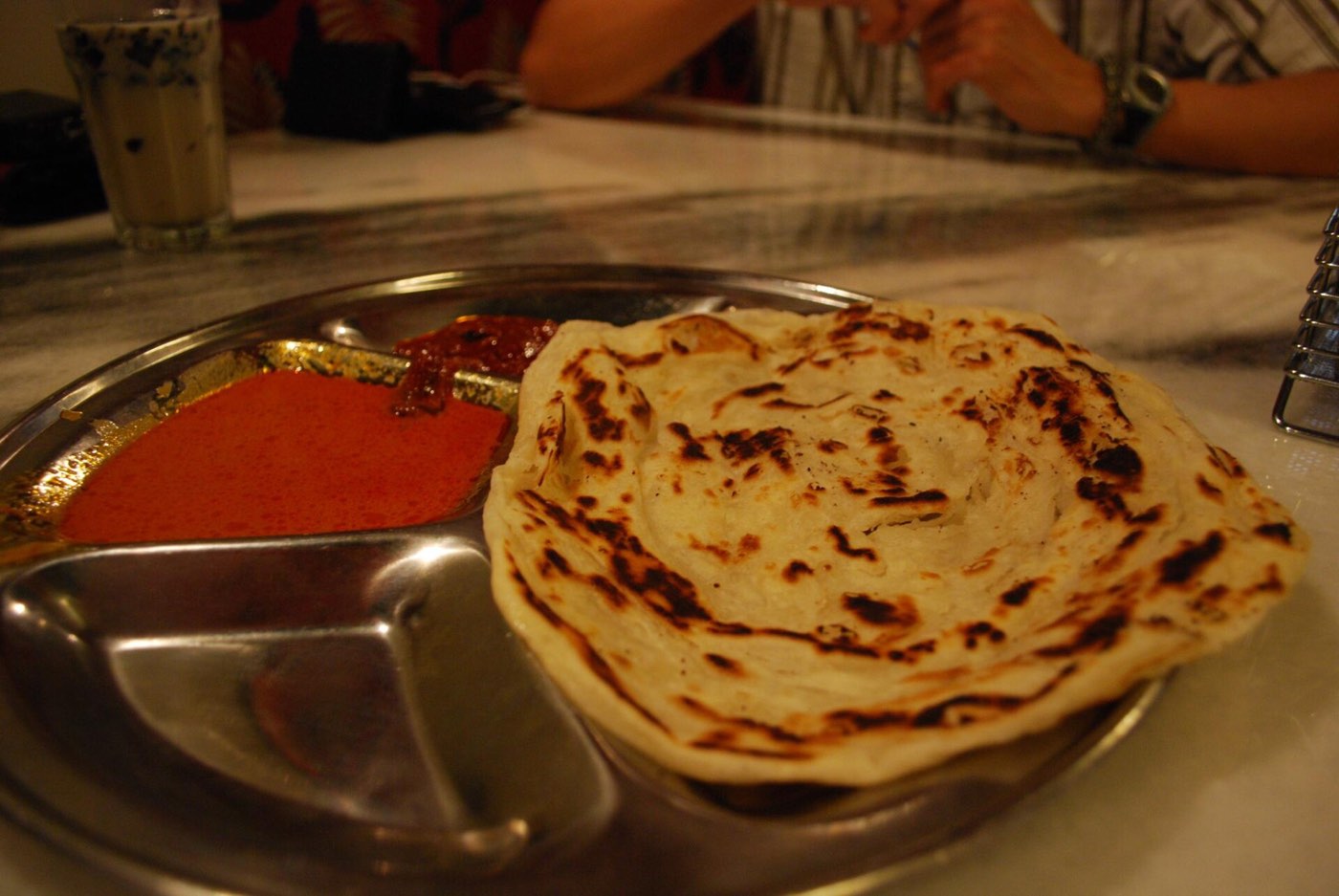
When in doubt, the mamak settles it — Indian-Muslim kitchens are halal by definition, they are open 24 hours, and there is one within a few minutes of anywhere you are likely to be staying. Roti canai and teh tarik, about RM5.
Halal Chinese and halal fine-casual are the growth story
The under-served category in Kuala Lumpur is not Malay food, which is everywhere and almost entirely halal. It is Chinese food, and the sit-down middle ground between a hawker stall and a hotel dining room — and both are growing faster than anything else in the city.
Roughly a quarter of Malaysia’s population is ethnically Chinese and the Chinese-Malaysian repertoire is one of the deepest in Southeast Asia — and historically most of it has been closed to Muslim diners, because the technique base runs on pork and lard. What has changed is that a generation of operators has rebuilt those dishes properly rather than apologetically. Halal dim sum is the clearest example, and a pork-free “bak kut teh” built on chicken and the same peppery herbal broth is the most conspicuous one, given that the original is a pork rib soup. Michelin has recognised a halal Malaysian-Chinese café, which is the strongest signal yet that this is a cuisine category rather than a substitution exercise.
The second gap is structural rather than religious. Kuala Lumpur has an enormous quantity of excellent halal food at RM8–15 and a thick layer of halal hotel dining at RM150+, and comparatively little in between: certified, sit-down, air-conditioned, RM40–70, with a wine-free drinks list that has had some thought put into it. That is the fastest-growing segment in the city right now, and it is the one to look for if you want a proper dinner rather than a plate at a market hall.
Two more things worth knowing. Most mall food courts in Kuala Lumpur are wholly or predominantly halal-certified, which makes them the reliable default in an unfamiliar area — at the usual 40–60% mall markup over street prices. And a large number of ordinary Chinese kopitiam stalls are not halal and do not claim to be, which is exactly why the kopitiam format, with its independent stalls sharing one room, needs checking stall by stall rather than at the door.
The things that actually come up
Not rules imposed on you — practical points that decide where you eat and when, gathered from what travellers most often get wrong here.
Indian-Muslim, halal by definition, open 24 hours, and there is one near wherever you are staying. Roti canai plus teh tarik is about RM5. It is also the most culturally important eating format in the country and a destination in its own right, not merely a fallback — the formats guide makes the case.
In Ramadan, street bazaars sell the year’s best Malay cooking in the hours before sunset, and RM20 will comfortably feed you. Hotels sell buffets of broadly the same food at RM160–320 a head. Go to the bazaar. Note that non-Muslims are welcome to buy and eat — nobody minds — and that stalls sell out fast once the crowd builds.
RM20 vs RM160–320A JAKIM-certified premises does not serve alcohol, and neither do Malay-Muslim restaurants generally. This is part of the certification rather than a licensing quirk. If you want a drink with dinner, that is a different venue and, given what alcohol costs here, a different budget.
Many Malay restaurants close during the fasting day and reopen for iftar at sunset; Chinese and Indian non-Muslim places carry on as normal, and mamak stay open. Eating and drinking in public during daylight is legal for non-Muslims and completely unremarkable in Kuala Lumpur, though it is courteous to be low-key about it.
Halal status varies restaurant by restaurant across the 2026 guide list and an entry tells you nothing either way. Ask the restaurant directly at the point of booking. This is the one part of KL eating where assuming from the cuisine will get you wrong.
Malaysians balik kampung — return to their home towns — at Hari Raya, and a large share of Malay restaurants and stalls shut for a week or more. Superb time for an empty city and a bad time for a food trip. Check the dates against your plans on the timing page.
Halal-friendly eating experiences
Two things to check before booking any food experience in Kuala Lumpur: whether the route is halal end to end, and whether the operator will re-route rather than simply leave you standing at a stall. The Malay-quarter and Little India tours are the straightforward ones.
Halal food in Kuala Lumpur FAQ
Is it easy to find halal food in Kuala Lumpur?
Very. Most food in the city is halal by default, mall food courts are largely certified, and mamak restaurants are halal by definition and open 24 hours for about RM5 a meal. The only category that needs checking is Chinese food, where many places are pork-free rather than certified.
Is pork-free the same as halal?
No. Pork-free is a self-declared claim about one ingredient and says nothing about slaughter method, alcohol used in cooking, or shared woks and fryers. Halal certification from JAKIM is a federal audit of the whole operation, from sourcing to utensil separation, with a numbered certificate and an expiry date.
What is JAKIM certification?
The federal Malaysian halal certification run by the Department of Islamic Development Malaysia with the state religious departments. It audits sourcing, slaughter, the supply chain, handling, storage, premises and separation of utensils, and issues a dated certificate that should be displayed near the counter or the door.
Is a mamak halal?
Yes — mamak restaurants are Indian-Muslim and halal by definition. They are open 24 hours, they serve no alcohol, and roti canai with a teh tarik costs around RM5. That combination makes them the default safe answer at any hour of the day or night in Kuala Lumpur.
Is Chinese food in Kuala Lumpur halal?
Mostly not, and many places say pork-free instead, which is a weaker claim. But halal Chinese is the fastest-growing under-served category in the city — halal dim sum, chicken-based “bak kut teh”, and a halal Malaysian-Chinese café with Michelin recognition. Look for the certificate rather than the cuisine.
Can I eat at a Ramadan bazaar as a non-Muslim?
Yes, and you should. The bazaars sell the year’s best Malay cooking in the hours before sunset and RM20 will feed you properly, against RM160–320 for a hotel Ramadan buffet of broadly the same food. Go early — the best stalls sell out as the crowd builds toward sunset.
Do restaurants in Kuala Lumpur serve alcohol?
Many do, but Malay-Muslim restaurants and JAKIM-certified premises do not, and that is part of the certification rather than a licensing issue. Alcohol is also the one genuinely expensive thing in KL — a pint is RM22–35 — which is covered on our bars page.
Is the Michelin list in Kuala Lumpur halal?
It varies restaurant by restaurant and a guide listing says nothing about it either way. Some entries hold JAKIM certification, some are pork-free, some are neither. Ask directly when you book — this is the part of KL eating where guessing from the cuisine will get you wrong.
Continue planning
Eat it with a local
Kuala Lumpur food tours & tastings — guided street-food crawls and cooking classes with vetted operators, most with free cancellation.