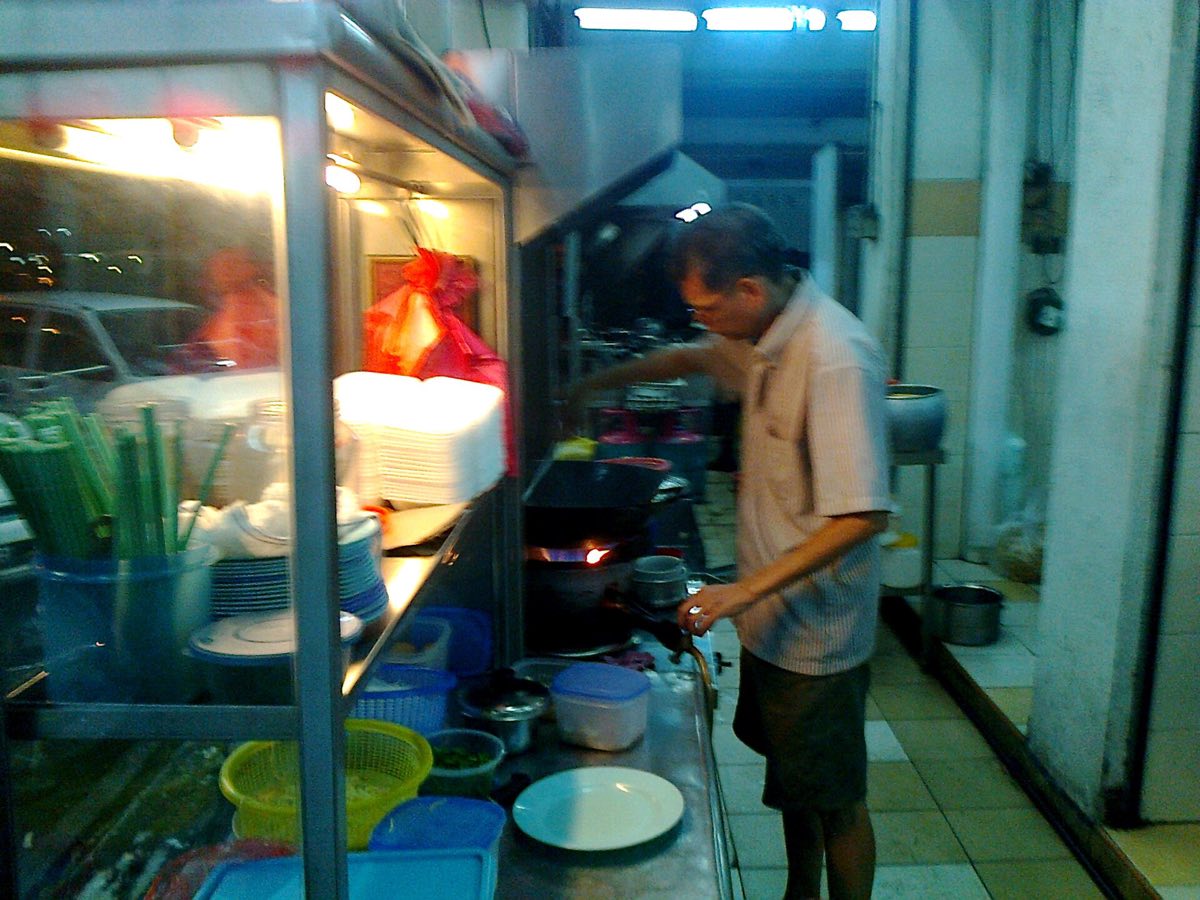
Ten dishes,
ten exact addresses
A dish name is useless in Kuala Lumpur. Every one of these is cooked badly within 200 metres of where it is cooked brilliantly, so this list gives you the stall, the street number, the hours and — the part everyone omits — the day it is shut.
These are the ten dishes worth building a trip around, each with the specific stall that does it properly. Two things to hold onto. First, KL Hokkien mee is the only dish on this list invented in Kuala Lumpur — at Kim Lian Kee, 42/92 Jalan Hang Lekir, in 1927, and it is still served at that address. Chilli pan mee is the other local invention but a modern one, created at Kin Kin in Chow Kit in the 1980s. Second, the closing days are not trivia: Madras Lane shuts Sundays and Mondays, ICC Pudu shuts Mondays, Heun Kee shuts Thursdays. Turn up on the wrong day and the dish simply is not there.
The ten dishes and where to eat them
Ordered as a sensible eating sequence rather than by rank — breakfast dishes first, the 02:00 one last. Every address, opening time and closing day below was checked in August 2026, and the prices are what you hand over at the counter.
| Dish | Where, exactly | Hours | Price | Verdict |
|---|---|---|---|---|
| Breakfast, Cantonese the market-hall spread | ICC Pudu (Imbi Market), Jalan 1/77C, Pudu | 07:00–10:00 · closed Mondays | RM8–15 | WORTH IT |
| Nasi lemak coconut rice, sambal, anchovies, egg | Nasi Lemak Wanjo, 8 Jalan Raja Muda Musa, Kampung Baru | 06:00–24:00 | RM10–15 | WORTH IT |
| Curry laksa coconut curry noodles, not the sour kind | Madras Lane, the alley off 69 Jalan Petaling, Chinatown | 07:30–11:30 · closed Sun and Mon | RM10–14 | WORTH IT |
| Chilli pan mee dry noodles, poached egg, fried anchovies, chilli flakes | Kin Kin, 40 Jalan Dewan Sultan Sulaiman 1, Chow Kit | 07:00–19:00 | RM10.50–12 | WORTH IT |
| Banana leaf rice South Indian, refills of rice and sides | Sri Nirwana Maju, 43 Jalan Telawi 3, Bangsar · Bib Gourmand | Lunch and dinner | ~RM8.50 | WORTH IT |
| Bak kut teh peppery pork rib soup, the Klang original | Seng Huat “Under the Bridge”, 9 Jalan Besar, Klang | 07:30–13:00 | RM20–35 | WORTH IT |
| Claypot chicken rice rice crisped against the pot over charcoal | Heun Kee, 59 Jalan Yew, Pudu · Bib Gourmand | 11:00–21:00 · closed Thursdays | RM15–25 | WORTH IT |
| KL Hokkien mee the only dish invented in this city | Kim Lian Kee, 42/92 Jalan Hang Lekir, Petaling Street — the address it was invented at in 1927 | 18:00–24:00 | ~RM18 | WORTH IT |
| Satay charcoal skewers, peanut sauce, ketupat | Willy Satay, Jalan Ramal 1, Kajang | 11:30–23:00 | RM1.20–2 a stick | WORTH IT |
| Roti canai and teh tarik at 02:00 the meal that explains the country | Any mamak with the lights on — they run 24 hours and there is one near wherever you are staying | 24 hours | ~RM5 | WORTH IT |
Eight of the ten are under RM15. The two that are not — Klang bak kut teh and Kajang satay — are half-days out of the city rather than detours, and both are worth one. Getting to either is covered on the day trips page.
KL Hokkien mee, Jalan Hang Lekir, 1927
Almost everything Kuala Lumpur is famous for eating was brought here. KL Hokkien mee was not — it was invented in this city, at a specific address, at a datable moment, and you can still eat it at that address tonight.
The dish is thick yellow noodles braised in dark soy with pork belly, cabbage and squid, finished with crisp lard. It is not the Penang Hokkien mee of the same name, which is a prawn broth and an entirely different plate — one of several places where Malaysian dish names travel badly between states.
It was created at Kim Lian Kee, 42/92 Jalan Hang Lekir, in 1927, and the shop is still on that corner off Petaling Street. Service runs 18:00–24:00 and a plate is about RM18. Go for the fact of it as much as the food: this is the one plate in Kuala Lumpur that could not have come from anywhere else.
The city’s other genuine invention is much newer. Chilli pan mee — dry hand-torn noodles under a poached egg, fried anchovies and a jar of chilli flakes you are supposed to be reckless with — was created at Kin Kin in Chow Kit in the 1980s, at 40 Jalan Dewan Sultan Sulaiman 1, open 07:00–19:00 for RM10.50–12. It now has imitators nationwide and a franchise industry behind it, which makes it the clearest live example of the succession problem further down this page.
Three famous names not to spend a meal on
Kuala Lumpur has very little genuinely bad food. What it has is famous food that is no longer worth the trip, and these three absorb more visitor meals than anything else on this page deserves to lose.
Coasting on a reputation built in the 1980s. It rates 3.1 out of 5 and sits at #1,553 of 4,942 Kuala Lumpur restaurants — the reviews are not close and have not been for years. Nasi Lemak Wanjo at 8 Jalan Raja Muda Musa is nearby, open 06:00–24:00, and RM10–15.
3.1/5 · #1,553 of 4,942A Singapore franchise import. It is a competent plate of soy chicken rice and it is also the one thing on Bukit Bintang you could eat in six other countries. In a city with this much single-family, single-dish cooking, spending a meal on an imported chain is the most expensive thing you can do with RM20.
Imported chainDuring Ramadan the big hotels sell buffets at RM160–320 a head. The bazaar on the street outside is cooking the same food, by the people whose food it is, and RM20 will comfortably beat you. This is the widest price-to-quality gap in Kuala Lumpur.
RM160–320 vs RM20Do not price KL from a delivery app — a RM10 plate lands at RM22–26 once fees and menu uplift are applied, which is why some visitors report the city as expensive. And do not default to a mall food court: it charges 40–60% over street price for a standardised version of a dish that is usually being cooked properly 200 metres away.
The succession problem, stated plainly
The most consequential negative trend in Kuala Lumpur’s food is not prices, hygiene or tourism. It is that the people cooking the defining dishes are in their 60s and 70s, working 14-hour days that start at 05:00, and most of them have no successor.
This is a physically punishing job on thin margins, and the children of the people doing it have largely gone into work that is neither. There are two escape valves. One is franchising — take the recipe, systematise it, put it in ten malls. The other is premium repositioning — move the same dish into an air-conditioned room, plate it, triple the price.
Both work commercially and both preserve the dish and lose the stall. The recipe survives. The charcoal, the 40-year-old wok seasoning, the specific pair of hands and the corner it happened on do not. Chilli pan mee has already been through this and you can buy a version of it in most malls in the Klang Valley; the original at Kin Kin is a different plate of food.
None of which is a reason for gloom, and it is definitely not a reason to treat these stalls as museum pieces — they are businesses, and the correct response is to go and spend money in them. It is a reason to chase the addresses rather than the dish names, and to do it this trip. Every address on this page was verified in August 2026, and we would not bet on all ten surviving to 2036 in the form they are in now.
The practical version: put the closing days into your itinerary before you build anything else around them. Two of the ten are shut on Mondays and Thursdays respectively, one is shut for the whole weekend, and the one-day and three-day itineraries are already sequenced around that.
Getting to the ones that need help
Nine of these ten you can walk up to alone with this page open. The exceptions are worth a booking: the Kajang satay run, and any first-night crawl where having someone order in Cantonese or Malay changes what arrives at the table.
What to eat in KL FAQ
What food is Kuala Lumpur famous for?
Nasi lemak, bak kut teh, banana leaf rice, satay and curry laksa — but the dish that is specifically KL’s is Hokkien mee, invented at Kim Lian Kee on Jalan Hang Lekir in 1927 and still served there 18:00–24:00 for about RM18. Everything else on the famous list arrived from somewhere else and was perfected locally.
What is the national dish of Malaysia?
Nasi lemak — coconut rice with sambal, fried anchovies, peanuts, cucumber and egg, eaten more often for breakfast than dinner. The version at Nasi Lemak Wanjo, 8 Jalan Raja Muda Musa in Kampung Baru, runs 06:00–24:00 and costs RM10–15 with a protein added.
How much does street food cost in Kuala Lumpur?
RM8–15 for a hawker plate, RM10.50–12 for chilli pan mee at Kin Kin, about RM8.50 for banana leaf rice at Sri Nirwana Maju, RM1.20–2 per satay stick, and around RM5 for roti canai with teh tarik. That is roughly US$2–4 a meal at RM 4.06 to the dollar.
What should I not eat in Kuala Lumpur?
Nothing on safety grounds. On value grounds, skip Nasi Lemak Antarabangsa (3.1/5, ranked #1,553 of 4,942), Hawker Chan (a Singapore franchise import), and hotel Ramadan buffets at RM160–320 when the bazaar outside does the same food for RM20.
Is bak kut teh worth the trip to Klang?
Yes, once, if you eat pork and you have a spare morning. Seng Huat “Under the Bridge” at 9 Jalan Besar serves 07:30–13:00 only, and Klang is a direct KTM Komuter ride, so it is a half-day rather than a whole one. It is the birthplace of the dish and the KL versions are not the same thing.
Can I eat all ten dishes in three days?
Eight of them, comfortably. Klang and Kajang each need their own half-day, so most people do one of the two. Sequence around the closing days first — Madras Lane is shut Sunday and Monday, ICC Pudu on Monday, Heun Kee on Thursday — and the rest slots in around them. The 3-day itinerary already does this.
Where is the best nasi lemak in Kuala Lumpur?
Nasi Lemak Wanjo in Kampung Baru, at 8 Jalan Raja Muda Musa, open 06:00–24:00 for RM10–15. It is ten minutes from the Twin Towers and it is the reason to walk past the famous 1980s name, which now rates 3.1 out of 5.
Related tickets, tours and stays
Deep links to specific products for the places on this page. Prices and availability are shown by each provider.
Continue planning
Eat it with a local
Kuala Lumpur food tours & tastings — guided street-food crawls and cooking classes with vetted operators, most with free cancellation.