The five formats
nobody explains to you
Visitors in Kuala Lumpur do not eat badly because they pick the wrong dish. They eat badly because nobody tells them how the room works — what you say at the counter, who takes the money, why the price is not on anything, and what time the city is actually hungry.
Kuala Lumpur runs on five eating formats and each has its own script. A kopitiam is a coffee shop where separate stall-holders share one room and the drinks man is a different business from the noodle man. A mamak is Indian-Muslim, halal, open 24 hours, and it is the most culturally important eating format in Malaysia — roti canai and teh tarik for about RM5. Economy rice (nasi campur) is point-and-pay, at RM12–15, with the price a genuine mystery until it is announced. A pasar malam is a night market that rotates neighbourhoods by day of the week. And a hawker centre is the street version of the mall food court that charges 40–60% more for a standardised copy. Then adjust your clock: dinner here is 20:00–21:00 and supper runs to 03:00.
The kopitiam, and how to order in one
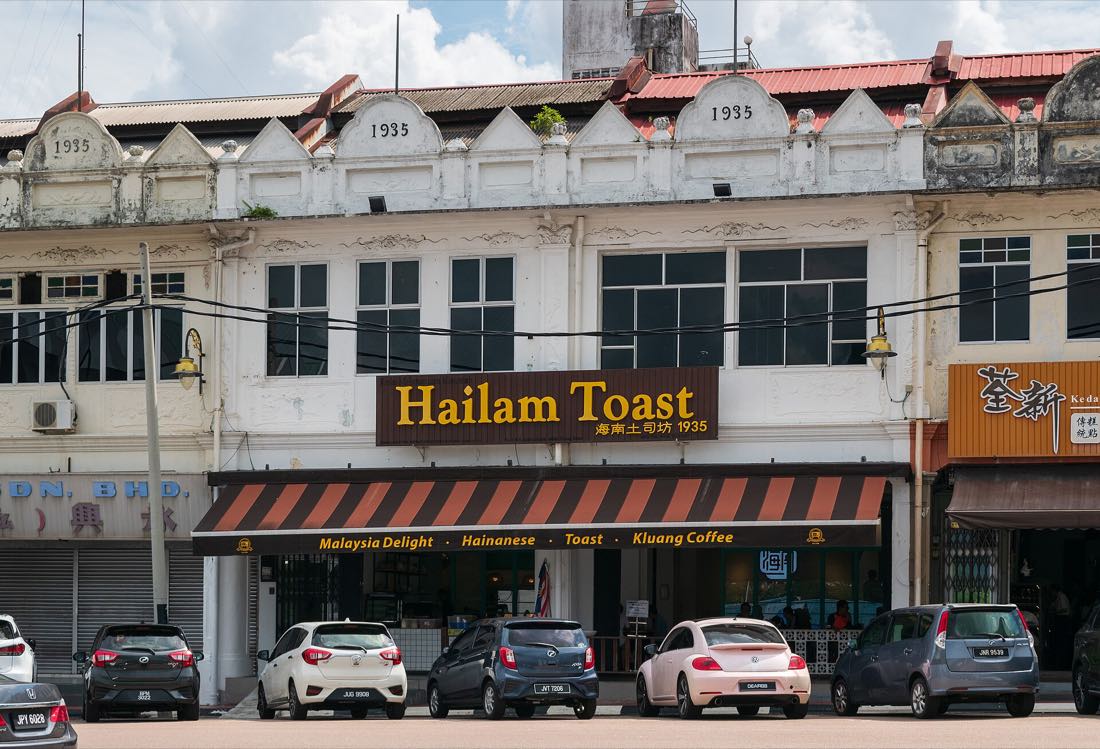
A kopitiam is not a café. It is a room — usually tiled, usually loud, usually with a ceiling fan doing very little — in which several independent stall-holders trade under one roof, and the person who owns the room sells the drinks. That single fact explains the whole ordering ritual.
Sit down first. Do not queue at a counter. Within about thirty seconds someone will appear at your table wanting your drink order — that person works for the shop and is the only one who will take payment for drinks. Order the drink, then get up and go to whichever food stall you want, order there, tell them your table, and pay that stall separately when the food arrives. Two bills, two businesses, one table. Visitors who wait for a single waiter to take everything will wait a long time.
The drinks vocabulary is a compact system rather than a menu, and it is worth ten minutes. The base words: kopi is coffee, teh is tea, O means black with sugar and no milk, C means with evaporated milk, plain kopi or teh means condensed sweetened milk, and kosong means no sugar. Stack them and you can order precisely: kopi C kosong is coffee with evaporated milk and no sugar. Add peng or ais for iced.
Teh tarik — “pulled tea” — is strong tea with condensed milk poured between two vessels from height until it foams. It is the national drink and it is better than that description makes it sound. Milo dinosaur is iced Milo with more undissolved Milo powder shovelled on top, and it is exactly as much of a sugar event as it sounds.
Breakfast in a kopitiam is kaya toast and half-boiled eggs, and the second half of that needs explaining. Kaya is a coconut-and-egg jam, spread thick with cold butter on charcoal-toasted white bread. The eggs arrive barely set, almost liquid, in a saucer — you crack them into the saucer, hit them with dark soy sauce and white pepper, and drink them. It is a texture that divides people on first contact and converts most of them by day three.
What to say at the drinks counter
Screenshot this. It is the single highest-value paragraph on the site for a first morning in Kuala Lumpur — the system stacks, so once you have these six words you can order any drink in the country.
| What you say | What arrives | Roughly |
|---|---|---|
| Kopi | Coffee with sweetened condensed milk. The default, and sweeter than you expect | RM2–3 |
| Kopi O | Black coffee with sugar, no milk. Add kosong to lose the sugar too | RM2–3 |
| Kopi C | Coffee with evaporated milk and sugar — lighter and less sweet than plain kopi | RM2.50–3.50 |
| Kopi kosong | No sugar. Kosong means zero and can be attached to anything on this list | RM2–3 |
| Teh tarik | Pulled tea with condensed milk, poured from height until it foams. The national drink | RM2.50–4 |
| Milo dinosaur | Iced Milo with a further heap of Milo powder on top. A dessert wearing a drink’s clothes | RM5–8 |
| Kaya toast + two half-boiled eggs | Coconut-jam toast with cold butter; the eggs come nearly liquid, for soy sauce and white pepper | RM6–9 |
Add peng or ais to any of them for iced. Nothing here is priced above RM9, which is why breakfast is the cheapest good meal in Kuala Lumpur and why the daily budget stretches further than visitors expect.
Mamak, economy rice, pasar malam, and the food-court trap
The other four formats take about a minute each to learn and between them they cover roughly every meal you will eat outside a restaurant.
The mamak. Indian-Muslim, halal by definition, open 24 hours, brightly lit, plastic chairs, football on a screen. This is the single most culturally important eating format in Malaysia — it is the one place where every community in the country eats side by side at 02:00 without anybody remarking on it. Roti canai and a teh tarik costs about RM5. The roti is flipped, slapped and folded in front of you and comes with dhal and curry to dip. The 2am mamak is the entry on the must-eat list that people skip, and skipping it is the most common mistake on this site — it is not a fallback for when everything else is shut, it is a destination.
Economy rice, or nasi campur. Lunch, for most of working Kuala Lumpur. You take a plate, you take rice, and you point at what you want from thirty or so trays of curries, vegetables, fried fish and eggs. Then the person at the end looks at your plate and announces a number. There is no menu and no price list — the charge is judged by what you took, with meat and fish weighted much more heavily than vegetables, and it is not negotiable and not a scam. Expect RM12–15, which is up sharply from RM6–6.50 a decade ago and is the price rise Malaysians complain about most. Two vegetables, one egg and rice will come in near the bottom; three proteins will surprise you.
Pasar malam. The night market, and it moves. Each neighbourhood has its own night of the week, the same traders rotate between them, and they set up around 17:00–18:00 and pack down by about 22:00. Ask at your hotel which night is local to you rather than travelling across town for a famous one. It is the cheapest good eating in the city and the best place to try five things for RM20.
Hawker centre against mall food court. They look like the same idea and they are not. A hawker centre is a permanent shed or market hall — ICC Pudu is the obvious one — where individual owner-operators cook one dish each, often for decades. A mall food court is a leased set of counters, frequently the same brands in every mall, cooking a standardised version to a spec. The mall version costs 40–60% more for less food and less of a cook. Air conditioning is a real benefit at 15:00 in a KL storm; it is not a 60% benefit.
The one to genuinely avoid: delivery apps as a price guide. A RM10 plate arrives at RM22–26 once menu uplift, service and delivery are added. Use them for a lazy night in, never as your mental model of what food costs here.
When Kuala Lumpur is actually hungry
The single biggest correction a visitor can make. KL eats late — dinner at 20:00–21:00 is normal, 19:00 is early, and the supper layer runs to about 03:00. Arriving at a food street at 18:30 and concluding it is dead is a scheduling error, not a discovery.
Still peak, and the most normal time in the city to be starting a meal. Heun Kee stops at 21:00.
The Manglish worth knowing
Malaysian English is its own thing, and using three words of it correctly changes how you are treated in a kopitiam more than any amount of politeness. “Boleh tahan” is the single most fluent thing a foreigner can say — it means “not bad”, delivered with a shrug, and it is the exact register Malaysians use about food they actually like.
| Word | What it means | How to use it |
|---|---|---|
| boleh tahan | “Not bad” — literally “can withstand”. Understatement as the highest form of approval | Say it about a meal you liked. It lands better than any superlative you could reach for |
| lah | A softener on the end of a sentence. Turns a statement into something friendlier and less blunt | “Can lah.” Do not overthink it and do not force it — you will pick up the rhythm in two days |
| lor | Resignation or “what can you do”. A different flavour from lah | “Sold out already lor.” Used when something is a shame but unfixable |
| tapau | To take away, to pack up. From Cantonese | “Tapau one, please” at any stall gets your food bagged rather than plated |
| lepak | To hang around with no agenda. A verb and a legitimate plan for an evening | “Lepak at the mamak” is what most of KL does after 22:00 and it costs about RM5 |
| paiseh | Embarrassed, awkward, shy about imposing. From Hokkien | “Paiseh, can I ask —” is a soft opener that works everywhere |
| cincai | Casually, whatever, however it comes. Do it roughly | “Cincai order” means let them choose for you. A very good move at a stall you do not know |
| balik kampung | To return to your home village | Explains why the city empties twice a year — see below. Everyone will know what you mean |
| B40 / M40 / T20 | The bottom 40%, middle 40% and top 20% of household income | Used constantly in ordinary conversation and in the news. Knowing it makes half of Malaysian politics legible |
Balik kampung is worth planning around. At Hari Raya and Chinese New Year the city genuinely empties as people return to their home towns — the roads out are jammed for days, and a large share of the stalls on the dish list simply shut for a week or more. Check the dates against your trip; it is the one time of year when Kuala Lumpur really is quiet, and the timing page has the detail.
The formats, practically
If you want the formats demonstrated
None of this needs a guide by day two. On day one, a walk with someone who orders in the right language is the fastest way to internalise all five formats at once — and the market-and-cook version teaches you the ingredient logic underneath them.
Eating like a local in KL FAQ
What is a mamak?
An Indian-Muslim coffee shop — halal, open 24 hours, cheap and everywhere. Roti canai with a teh tarik costs about RM5. It is the most culturally important eating format in Malaysia because it is where every community eats side by side at 02:00, and it is the default safe answer at any hour of the night.
What is a kopitiam?
A traditional coffee shop where independent stall-holders share one room. The shop sells the drinks and takes that order at your table; the food stalls are separate businesses you order from and pay directly. Sit down first, order a drink, then go to a stall — two bills, one table.
How does economy rice work in Malaysia?
You take a plate of rice and point at what you want from the trays. The cashier judges the plate and announces a price at the end — there is no menu and no price list. Expect RM12–15, up from RM6–6.50 a decade ago. Meat and fish are weighted much more heavily than vegetables.
What does kopi O mean?
Black coffee with sugar and no milk. C means evaporated milk, plain kopi means sweetened condensed milk, and kosong means no sugar — so kopi C kosong is coffee with evaporated milk and nothing else. Add peng or ais for iced. Most of them are RM2–3.50.
What time do Malaysians eat dinner?
Between 20:00 and 21:00, with 19:00 counting as early. The supper layer at mamak and Chinese tai chow stalls runs until about 03:00. Visitors eating at 18:30 and finding streets half-empty have found a clock problem rather than a dead city.
What is teh tarik?
Strong tea with condensed milk, poured repeatedly between two vessels from height until it foams — the name means “pulled tea”. It is the national drink, costs RM2.50–4, and is available at every mamak in the country at any hour.
Is it rude to eat with your hands in Malaysia?
No — it is normal for Malay and South Indian food, including nasi lemak and banana leaf rice. Use your right hand only; the left is considered unclean. Every place that expects it provides a sink or a finger bowl, and nobody will mind at all if you use cutlery instead.
What does “boleh tahan” mean?
“Not bad”, literally “can withstand”. It is understatement used as genuine praise and it is the single most fluent thing a foreigner can say about a meal in Malaysia. Deliver it with a small shrug and you will get a much warmer response than any superlative.
Continue planning
Eat it with a local
Kuala Lumpur food tours & tastings — guided street-food crawls and cooking classes with vetted operators, most with free cancellation.