2 days in Kuala Lumpur,
without wasting either.
Two days is the length most people give this city and the length most people get wrong, because they spend day one walking at 14:00 and day two queueing at noon. Split it into the old core and the new one, put the single tower ticket at sunset on the second evening, and 48 hours works.
Kuala Lumpur runs on a clock, not a map. Outdoors between 07:00 and 11:00, indoors from 11:00 to 16:00, inside something with a roof for the 16:00–18:00 storm window, and out again from 19:00, when the city finally becomes itself and stays that way until 02:00. Every itinerary on this site is built on that shape. Ignore it and you will write the review that says KL is boring. With two days you can afford exactly one paid view, and it should be the last Petronas slot before sunset on day two at RM98 — up in daylight, down in the dark. Day one is the old core and costs almost nothing. Day two is Batu Caves at 07:30 by KTM Komuter (RM2.60), Royal Selangor — free entry, free shuttle, TripAdvisor’s #2 attraction in KL at 4.7 from 5,142 reviews — and then the towers.
Old core on day one, new core on day two
The single most useful decision in a 48-hour trip is not which sights to cut — it is which half of the city each day belongs to, because moving between them wastes an hour you do not have.
Day one is the old core: the museum quarter, the mosque, the river confluence, Merdeka Square and the Chinatown lorongs. It is walkable end to end, it is served by Pasar Seni and Masjid Jamek on the LRT and MRT, and it costs about RM40 including lunch and dinner.
Day two is the new core: Batu Caves out on the KTM Komuter first thing, Royal Selangor mid-morning, then KLCC for the tower slot and the fountains. This is the day with the money in it — RM98 for Petronas — and the day that needs booking ahead, because Petronas slots are capped and reliably sell out.
Kuala Lumpur is around 32°C every day of the year and it storms most afternoons between 16:00 and 18:00, hardest in April–May and October–November. Front-load anything outdoors before 11:00 and keep an indoor fallback for 16:00 — that single habit fixes most bad days here.
One booking warning that catches people out on short trips: Petronas runs Tuesday to Sunday plus public holidays, 09:00–21:00, last admission 20:30, and it closes on Mondays except the second and fourth Monday of the month. If your day two is a Monday, check the calendar date before you build the evening around it, and read the full Petronas verdict first.
The old core, 08:00 to midnight
Merdeka Square and the confluence, before the heat
Start at Dataran Merdeka with the Sultan Abdul Samad building opposite, then walk five minutes north-east to Masjid Jamek, which sits on the sandbar where the Klang and Gombak rivers meet — the literal muddy confluence the city is named after. Entry is free, robes are provided free, and it closes to visitors during prayer times; the published clock times are unreliable, so ask at the door. Both are free and both are far better at 08:00 than at 14:00.
Islamic Arts Museum — RM20, opens 09:30
Ten minutes south-west by Grab. The Islamic Arts Museum Malaysia is RM20 for a non-Malaysian adult, RM10 for students, and it runs 09:30–18:00 with no weekly closing day. Give it two hours. It is the best museum in Malaysia and the first air-conditioned room of the day, which is the other reason it sits here.
Masjid Negara and Perdana Botanical Gardens — free
The National Mosque is four minutes on foot from the museum and the Perdana gardens run behind it. Free, robes provided, closed to visitors at prayer times. Keep this short — it is the warmest part of the plan, and the trees do most of the work.
Lunch, then the Chinatown lorongs
MRT Kajang line to Pasar Seni. Eat economy rice in a kopitiam for RM12–15, then walk the back lanes: Kwai Chai Hong, Lorong Panggung’s blue shophouses, Jalan Sultan. All free, all shaded, all excellent. Walk past the Petaling Street covered market — 3.6 out of 5 from 11,733 reviews and the biggest single disappointment in the city.
Storm cover at REXKL
The rain arrives. REXKL on Jalan Sultan — a burnt-out cinema rebuilt as a bookshop and coffee hall — is the best room in the old city to spend two wet hours in, and it costs nothing to sit in. Central Market across the road is the backup at 3.9 out of 5. Both put you 10 minutes from Merdeka 118, which is worth walking under at dusk when the light hits the facade.
Dinner in Kampung Baru — RM10–15
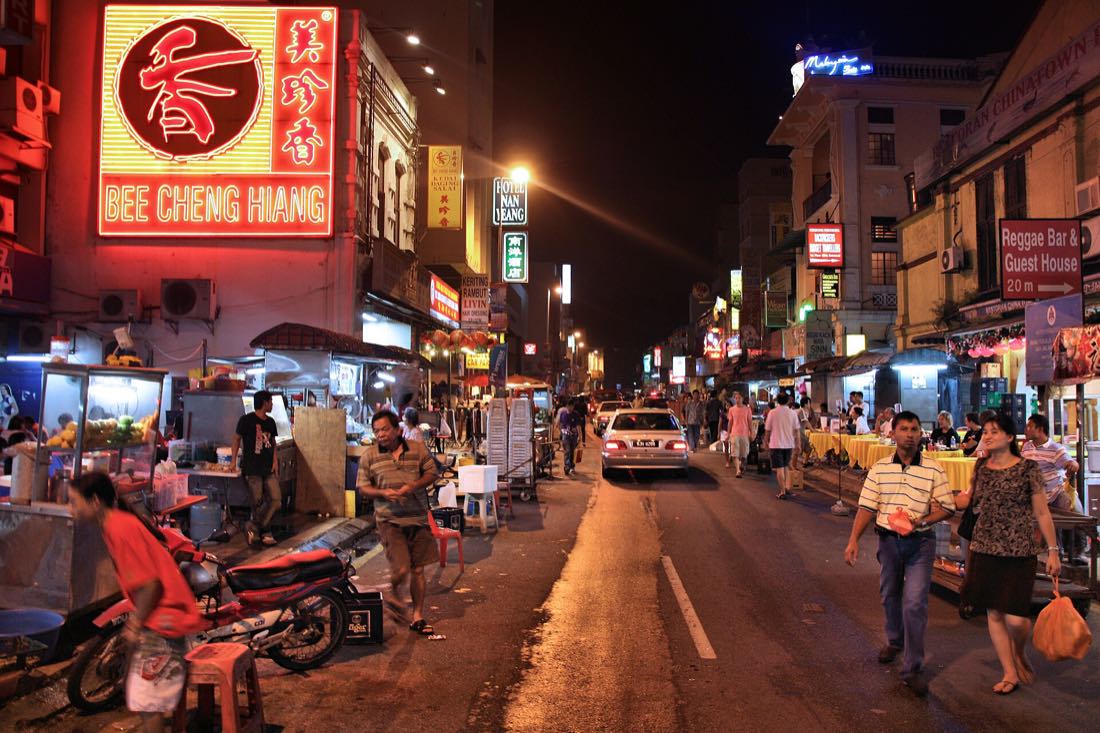
Take the LRT to Kampung Baru and eat at Nasi Lemak Wanjo, 8 Jalan Raja Muda Musa, 06:00–24:00, for RM10–15. You are in a Malay village of wooden stilt houses with the Twin Towers lit up behind them, which is the most quietly extraordinary sightline in Kuala Lumpur and does not cost a ringgit. More on the Kampung Baru page.
A mamak, roti canai, RM5
End at the 24-hour Indian-Muslim coffee shop nearest your hotel. Roti canai and a teh tarik is about RM5 and the room will be full at midnight on a Tuesday. If you would rather drink than eat, note that alcohol is the one thing in this city that is not cheap: a pint is RM22–35 after the 10% excise rise on 1 November 2025. See bars and nightlife.
Batu Caves, pewter and the sunset slot
KTM Komuter to Batu Caves — RM2.60 each way
From KL Sentral to the end of the line. The Temple Cave is free and open 07:00–21:00, the 272 steps are painted, and at 07:30 you have them to yourself. Sarong hire RM5–10 if you need to cover up. Ramayana Cave is RM5, Cave Villa RM15, and the Dark Cave’s status is disputed across sources — ask on the day. Keep food out of sight; the macaques are professionals.
Royal Selangor Visitor Centre — free, with a free shuttle
TripAdvisor’s #2 attraction in Kuala Lumpur, 4.7 out of 5 from 5,142 reviews, and it costs nothing to walk into. The factory tour through the pewter foundry is free, the shuttle bus is free, and the only thing you pay for is the RM80 School of Hard Knocks workshop where you hammer your own bowl — which is the single best-value paid hour in the city for anyone travelling with children. Full verdict on the Royal Selangor page.
Lunch and the indoor block — Bukit Bintang or the walkway
Back into town for the hottest four hours of the day. Bukit Bintang is wall-to-wall air-conditioning and the 1.17km covered pedestrian walkway from Bukit Bintang to KLCC means you can cross the middle of the city at 15:00 without leaving the shade. Eat at a hawker centre rather than a mall food court — the mall markup runs 40–60%.
The storm hour — Aquaria KLCC or Suria
If it is raining and you have children, Aquaria KLCC is directly under the convention centre, runs 10:00–20:00 with last entry 19:00, and starts from RM80 for a non-MyKad adult — treat that as a floor rather than a firm price, because the operator’s own pricing is not cleanly readable. If it is not raining, sit in KLCC Park with a coffee instead and save the money.
Petronas Twin Towers — RM98, the last slot before sunset
The only slot worth the money. You go up in daylight, the city lights come on while you are on level 86, and you come down in the dark. RM98 for a non-Malaysian adult, RM50 child or senior; a MyKad holder pays RM35. One ticket covers the Skybridge on level 41 and the deck on level 86, the whole thing takes about 90 minutes, and slots are capped — book at least three days ahead, a week for weekends.
The fountains from KLCC Park — free
Walk out of the tower and straight into the park for the Lake Symphony show. This is where the photograph of both towers, lit and reflected, is actually taken — you cannot take it from inside the building you are standing in. It costs nothing and it is the better half of the evening.
Jalan Alor, and then the city that stays open
Ten minutes south on foot or two stops on the monorail. Jalan Alor is the loud, touristed, genuinely enjoyable end of the evening; prices are 30–50% over a neighbourhood hawker centre and nobody minds. From here Kuala Lumpur runs to 02:00 and later — the full map of that is on KL after dark.
What to lock in before you land
Almost every ticketed attraction in Kuala Lumpur charges foreigners more than Malaysians — Petronas is RM98 against RM35, a 180% gap. Resellers headline the MyKad rate. Every price on this site is the non-MyKad rate you will actually pay, and the gate price sits next to the reseller price so you can see the markup.
Two days in Kuala Lumpur FAQ
Is 2 days enough in Kuala Lumpur?
It is enough for the old core and the towers, and not enough for a day trip. Two days covers Batu Caves, the Islamic Arts Museum, Chinatown, Royal Selangor and one sunset tower slot. If you can find a third day, spend it on Ipoh by train — that version is our 3-day itinerary.
Which day should I book the Petronas Towers?
The second evening, at the last slot before sunset — around 19:00 in August. Book at least three days ahead because slots are capped and genuinely sell out. Note that it is closed on Mondays except the second and fourth Monday of each month.
How much do 2 days in Kuala Lumpur cost?
Around RM230 per person excluding your room: about RM40 on day one, RM98 for the Petronas ticket, RM80 if you do the pewter workshop, and roughly RM60 of food and rail across both days. Rooms run from RM60 for a capsule to RM780 for five-star — the calculator is on what KL costs.
Is Royal Selangor really free?
Yes. Entry to the Visitor Centre and the factory tour cost nothing, and the shuttle bus from the city is also free. Only the workshops are paid, at RM80. It sits at #2 on TripAdvisor’s Kuala Lumpur attraction list with 4.7 out of 5 from 5,142 reviews, which makes it the best free thing in the city after Batu Caves.
Where should I stay for a 2-day trip?
Chinatown for value and walkability, Bukit Bintang if you want everything on your doorstep and do not mind the crowds. Avoid anything sold as “near LRT” in Ampang or Bangsar without checking the walking layer — it routinely means a 25-minute uphill walk with no continuous pavement. See where to stay.
Can I fit a day trip into 2 days in KL?
Not without gutting the city. Ipoh is 2h20 each way by ETS train and Melaka is about 2 hours by bus, so either one eats a full day. With 48 hours the honest answer is to do Kuala Lumpur properly and save the day trips for a third day.
What is there to do in KL when it rains?
The 16:00–18:00 storm window is planned indoors on both days here — REXKL and Central Market on day one, the covered walkway or Aquaria on day two. The 1.17km air-conditioned bridge between Bukit Bintang and KLCC means you can cross the centre without getting wet. More on our rainy-day page.